
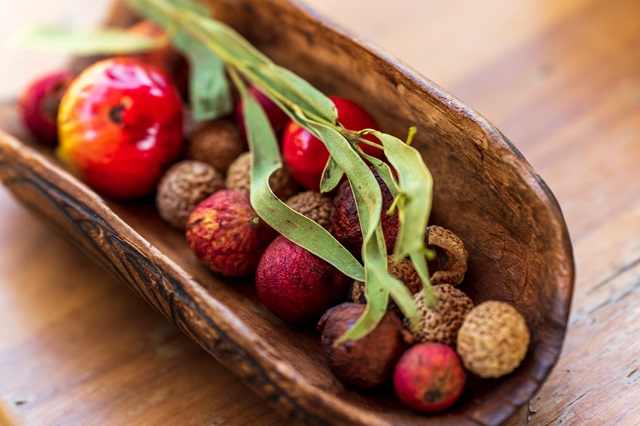
Finger lime “caviar” and vitamin C-rich Kakadu plum are winning fans in kitchens worldwide, but University of Queensland researchers say the booming native food industry must put Indigenous rights and knowledge at its centre.
UQ School of Agriculture and Food Sustainability PhD candidate Keely Perry led a review, examining the cultural, scientific and regulatory forces shaping Australian native foods as they move from bush tucker to boutique menus and supermarket shelves.
Ms Perry said the macadamia nut was a cautionary tale for the sector.
“It’s the only Australian native plant to become a true global food commodity, but along the way it lost its name, its story and its connection to the Indigenous communities who first used it,” she said.
“We wanted to look at whether finger lime, Kakadu plum, wattleseed and other native foods are heading down the same path, or whether the industry can do better this time.”
The review brings together research on the phytochemistry, nutrition and culinary properties of species such as finger lime, Kakadu plum, lemon myrtle, bunya nut and wattleseed, alongside the legal and ethical frameworks meant to protect Indigenous Cultural and Intellectual Property (ICIP).
Ms Perry said fewer than 75 native food businesses were currently certified with Supply Nation as Indigenous-owned, despite the deep cultural significance of the ingredients.
“These plants and animals aren’t just novel ingredients, they’re tied to identity, law and thousands of years of knowledge about Country,” Ms Perry said.
“Chefs and producers have an opportunity, and a responsibility, to work directly with Traditional Owners rather than simply borrowing the flavour.”
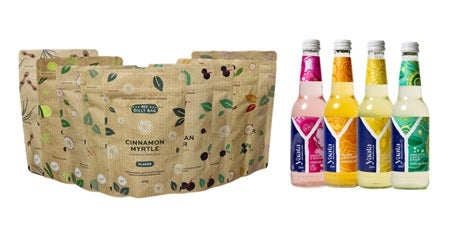
The work highlights emerging tools to protect the sector, including sensory “flavour wheels” that give chefs a shared language for describing native ingredients, and new authentication methods such as near-infrared spectroscopy and elemental fingerprinting that can verify a product’s origin and guard against mislabelling.
It also makes the nutritional case for native foods, noting some Australian native currants have shown antioxidant activity up to eight times higher than blueberries in laboratory testing, positioning them as a potential functional ingredient rather than just a novelty flavour.
“There’s just so much potential in this space,” Ms Perry said.
“Commercialisation done well could deliver real benefits, pointing to Indigenous-owned enterprises already building brands around species such as the green plum.
“Gidyea gum is another example – it’s a newly identified natural emulsifier that performs comparably to, and in some cases better than, imported gum Arabic, offering a potential new commercial avenue for native plant exudates.
“But really we need stronger, more consistent regulation across states and territories, greater investment in Indigenous-led research, and closer collaboration between chefs, scientists and Traditional Owners as native foods take a bigger place on Australian plates and international menus.
“Australia's legislation governing native plant use was written with limited input from Indigenous communities, and this leaves a gap between the letter of the law and genuine recognition of Traditional Knowledge – it needs to change.”
The research was a collaborative project, with significant contributions from Dr Joseph Nastasi, Dale Chapman, Professor Bronwyn Fredericks and Honorary Professor Melissa Fitzgerald.
It was supported by the Australian Research Council through the project “A Deadly Solution: Towards an Indigenous-led bush food industry”.
Read the review via Food and Humanity.


