
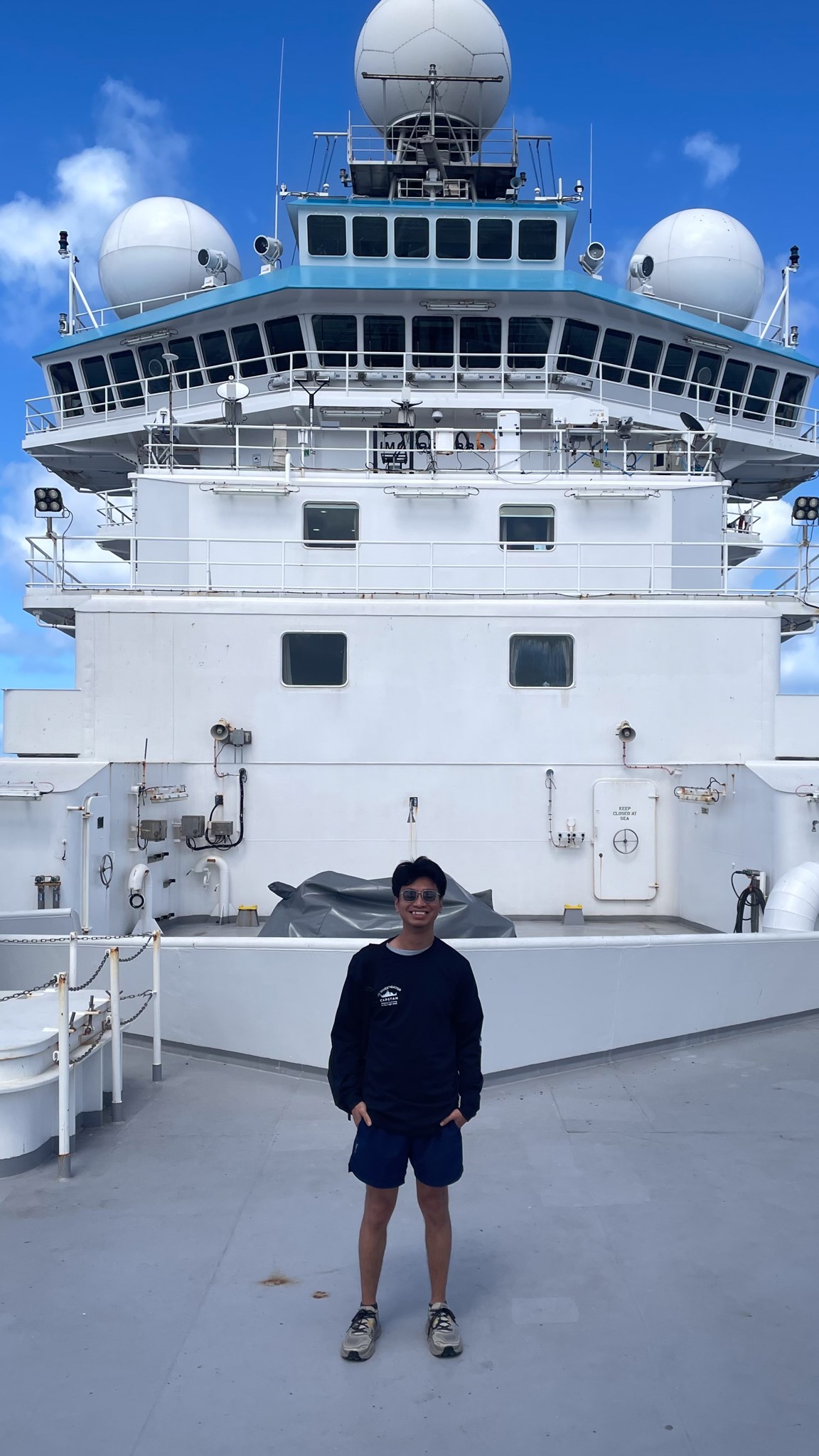
A University of Queensland PhD student who has spent a decade studying lost oceans has finally gone to sea, joining a 14-day research voyage from Brisbane to Fiji.
Julius Pasco was one of 20 students from across Australia aboard CSIRO research vessel (RV) Investigator for the first international voyage of national sea-training program CAPSTAN.
Mr Pasco’s PhD focuses on rocks scattered along eastern Australia that record oceans long since consumed by tectonic forces, but until now, working at sea was uncharted territory.
“I’ve never had the opportunity to work at sea and witness how oceans are studied in real time,” Mr Pasco said.
“CAPSTAN helped me bridge the gap between what I have reconstructed from ancient rocks and what can be learned directly from the ocean itself.”
Delivered by CSIRO, the University of Tasmania's Institute for Marine and Antarctic Studies and the Australian and New Zealand International Scientific Drilling Consortium, the voyage arrived in Lautoka, Fiji, on 23 September.
The journey passed through Australia's exclusive economic zone before crossing into international waters, giving students hands-on experience across geology, biology, chemistry and oceanography.
Along the way, students measured the properties of an underwater mountain in the Coral Sea, mapped the seafloor, surveyed shipwrecks and sampled ocean waters for microplastics and environmental DNA.
Mr Pasco said the team mapped the seafloor around Althea II, a shipwreck near Bundaberg, and discovered a ring of mysterious holes surrounding the wreck.
“We deployed a drop camera and saw that the area was full of marine life, suggesting the holes were probably due to bioturbation – disturbance in the sediment from biological activity,” he said.
His favourite task was sampling the seafloor directly, comparing shell-rich sediment from near the Bundaberg coast with a core drawn from the deep sea.
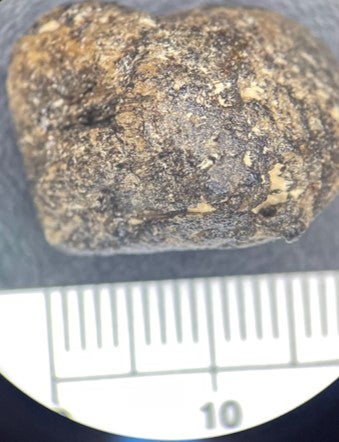
“We found pumice – a really light volcanic rock – and volcanic glass across the core, suggesting volcanic activity has been occurring in the area for the last 100,000 years or more,” Mr Pascoe said.
The experience has Julius eyeing a new direction for future research.
“Joining CAPSTAN opened up a whole new world of science for me,” Mr Pascoe said.
“I'm really interested in hydrochemistry and ocean circulation, so I'd like to find a way to marry geoscience with these fields.”
Life aboard RV Investigator also left its mark, with students from universities across Australia starting out as strangers.
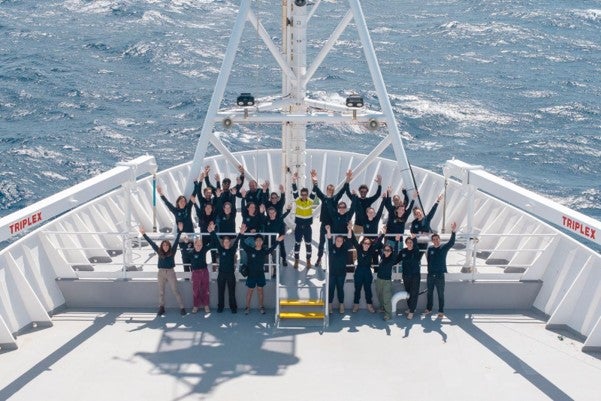
“It was a laboratory, weather station and research vessel, and there is always science happening,” Mr Pascoe said.
“Doing science daily, eating in the mess, looking out for marine mammals and seabirds on the observation deck, and relaxing in the lounge made us really good friends in the end.”
“CAPSTAN is definitely a highlight of my science career, and something I will take with me forever.
“I invite everyone who has an interest or curiosity towards the marine realm to give it a try.”


